When is alignment needed?
Identify problems early — it saves your money and improves driving safety.
Hitting a pothole
After driving into a deep pothole, the alignment angles may shift.
Hitting a kerb
Hitting a kerb can alter the wheel alignment angles.
Car pulls to one side
If the car pulls to one side on a straight road, alignment is needed.
After suspension repair
Front or rear axle repair always requires alignment adjustment.
After tyre changing
We recommend checking the wheel alignment after every tyre change.
Why is wheel alignment important?
Extends tyre lifespan
Properly aligned wheels ensure even tyre wear, significantly extending tyre service life.
Reduces fuel costs
Incorrect alignment angles increase rolling resistance, raising fuel costs. Proper alignment helps you save.
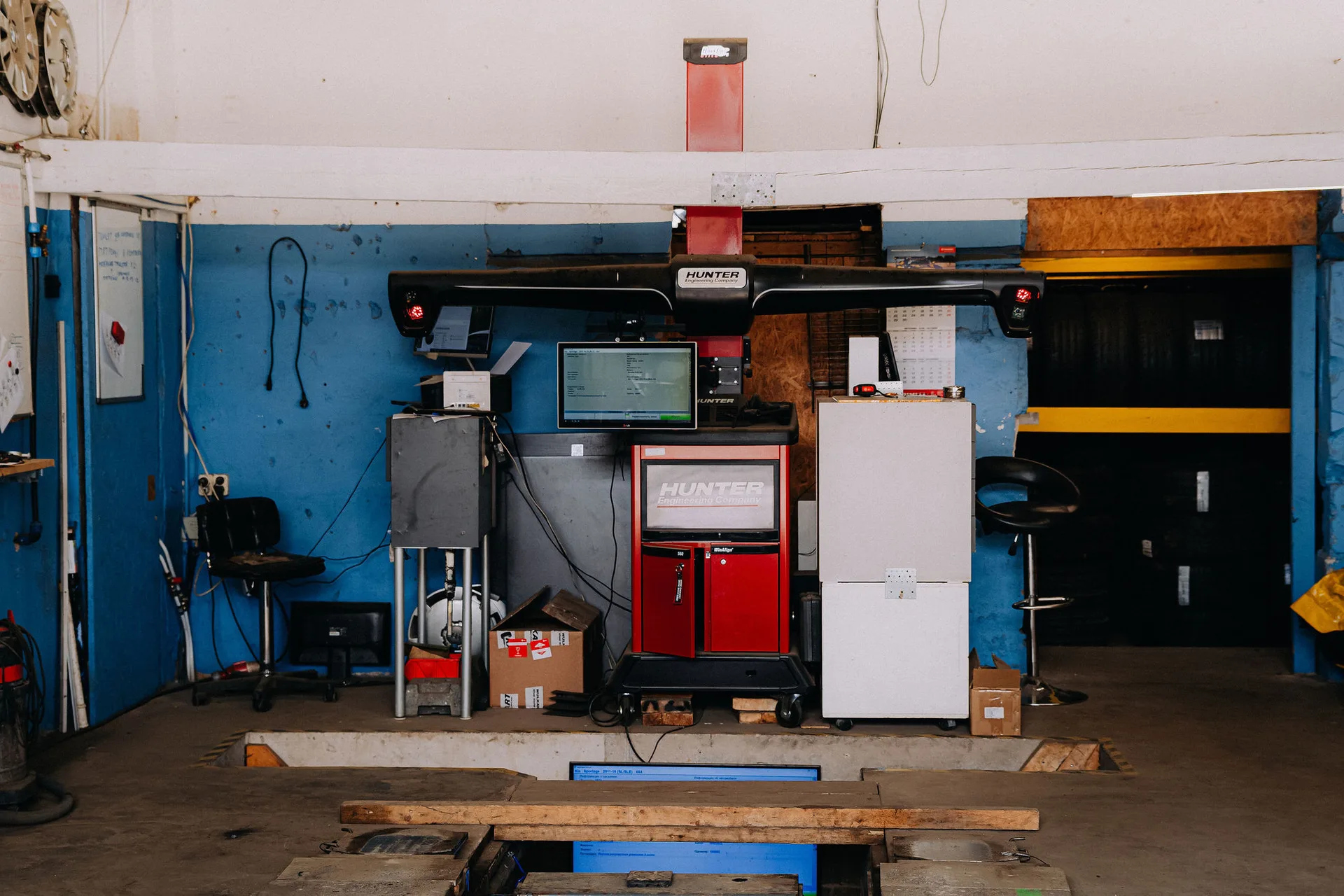
3D Wheel Alignment Stand
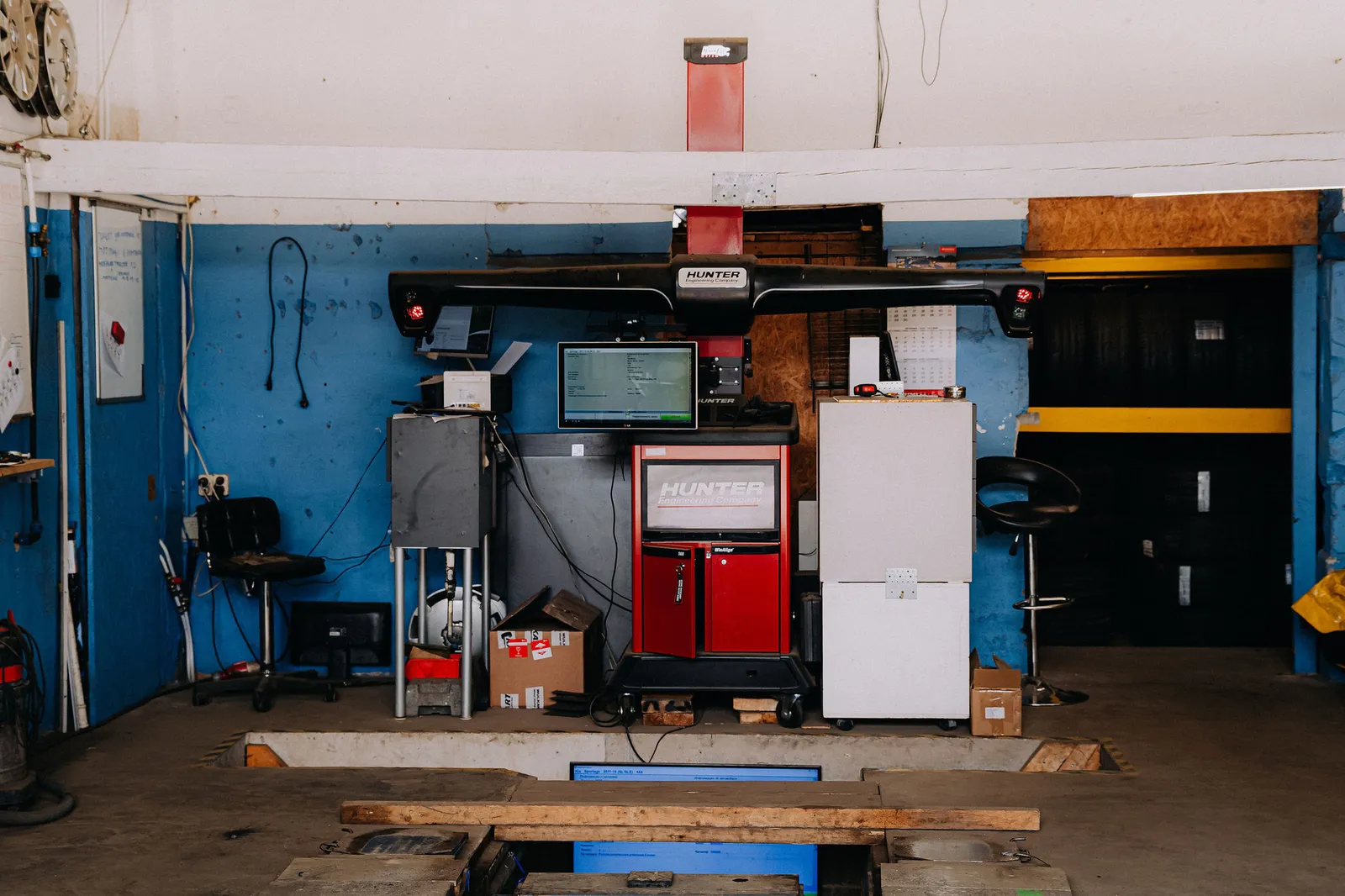
We use a modern 3D alignment stand that ensures ultra-precise measurement and adjustment. The equipment measures all angles in three dimensions and provides real-time feedback.
- Ultra-precise 3D measurement on all axles
- Real-time visual feedback for the technician
- Suitable for all passenger cars and minibuses
When should you check your wheel alignment?
At least once a year — as a preventive check
After hitting a pothole or kerb
If the car pulls to one side on a straight road
After a tyre change — the best time for a check
After front or rear axle repairs
Price list
Clear and fair prices. All prices include VAT.
Passenger car / crossover — 1 axle
Mercedes and BMW: 50 €
Passenger car / crossover — 2 axles
Mercedes and BMW: 70 €
Van up to 6m
Van from 6m
Vans
Customer reviews
"The car drives much more stable now. The tyres wear evenly and fuel consumption has dropped noticeably. Highly recommend!"
"Fast and professional service. The technician explained all the measurement results clearly. I will definitely come back next time."